Payment Integration Patterns That Shape Strategy Choices in Live Dealer Slot Tournaments at Recently Launched Portable Platforms
Sam Brooks · Aug 31, 2026

Payment Integration Patterns That Shape Strategy Choices in Live Dealer Slot Tournaments at Recently Launched Portable Platforms
Payment integration patterns have evolved rapidly on portable platforms that host live dealer slot tournaments, and these systems directly influence how operators design entry fees, prize distributions, and real-time wagering mechanics. Recent launches in 2025 and into August 2026 introduced modular payment gateways that support instant deposits from digital wallets, bank transfers, and cryptocurrency rails, which in turn allow tournament formats to scale across regions without traditional settlement delays. Observers note that platforms using unified API layers reduce transaction friction, enabling players to adjust bet sizing mid-round while live dealers manage the physical reels and random number overlays.
Core Payment Integration Models in Mobile Tournament Environments
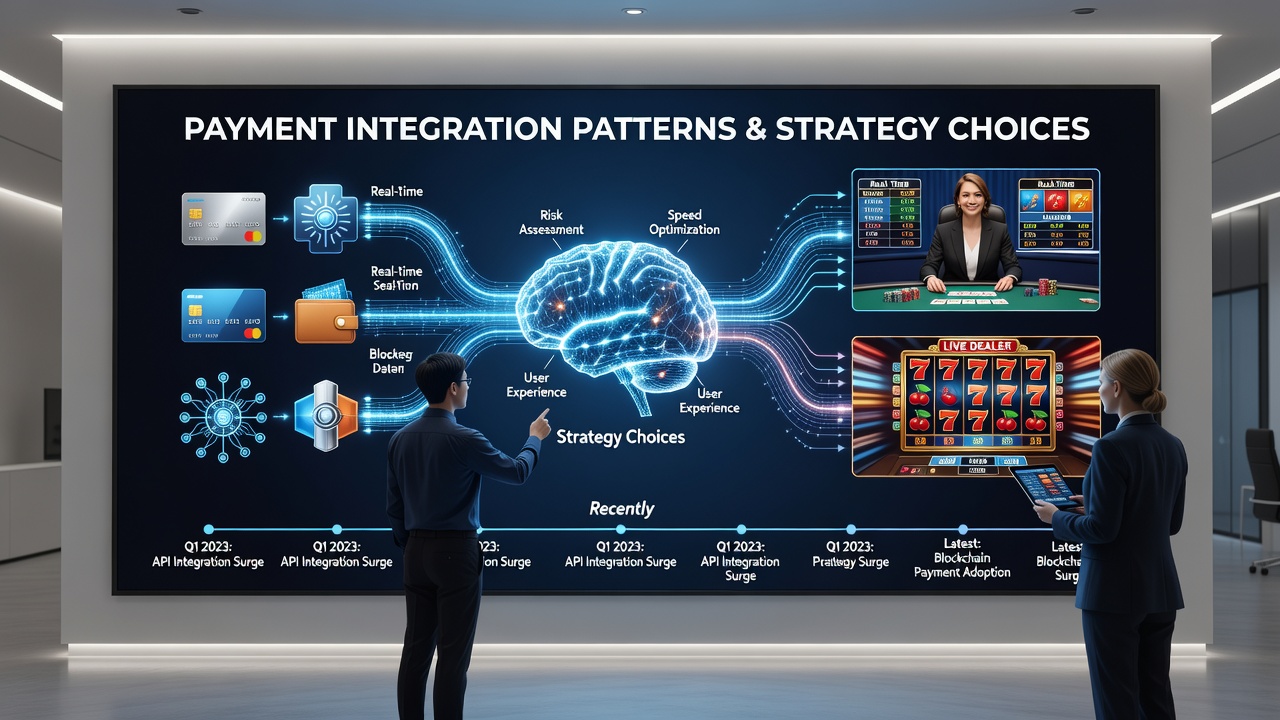
Three dominant patterns appear across newly deployed portable platforms: direct ledger synchronization, tokenized multi-channel routing, and hybrid escrow with instant release triggers. Direct ledger synchronization connects player accounts to the tournament engine in real time, so entry fees debit immediately upon registration and credits post to balances within seconds of round completion. Tokenized multi-channel routing routes payments through secure tokens that mask banking details, which supports cross-border entries without repeated compliance checks. Hybrid escrow holds funds until the final dealer spin resolves, then releases winnings automatically to linked accounts. Research from the New Jersey Division of Gaming Enforcement indicates these models cut average settlement times from hours to under ninety seconds in controlled tests conducted through mid-2026.
Strategic Adjustments Driven by Transaction Speed and Fee Structures
Live dealer slot tournament organizers adjust prize pools and blind structures based on the fee transparency and speed of each integration pattern. When platforms employ low-fee tokenized routing, operators expand entry brackets to include micro-stakes participants, which broadens field sizes and alters risk distribution across rounds. Faster credit releases encourage aggressive re-buy strategies because players see funds return quickly enough to re-enter subsequent heats. Data from the Canadian Gaming Association shows fields grew 28 percent on platforms that adopted instant-release triggers between January and August 2026 compared with slower legacy systems. Tournament directors therefore calibrate starting stacks and payout ladders to match expected cash-flow velocity rather than fixed schedules.
Regional Regulatory Influences on Integration Choices
Portable platforms launching in different jurisdictions adapt integration patterns to satisfy local rules on fund segregation and audit trails. European operators often combine escrow models with mandatory cooling-off periods before large payouts, whereas North American deployments favor tokenized routing that logs every micro-transaction for state-level reporting. Australian regulators require visible fee breakdowns at the point of entry, which pushes developers to embed real-time cost displays inside tournament lobbies. These variations force strategy teams to maintain separate rule sets for each region while sharing the same core payment engine across portable devices.
Impact on Player Decision-Making and Tournament Flow
Players adapt their pacing and risk tolerance once they experience consistent transaction performance. Those competing on platforms with direct ledger synchronization tend to spread entries across multiple simultaneous tournaments because balance updates arrive fast enough to avoid idle capital. In contrast, participants on escrow-heavy systems often consolidate entries into single high-stakes events to minimize repeated funding steps. Studies released by the University of Nevada, Las Vegas International Gaming Institute in early 2026 documented a measurable shift toward multi-table strategies on low-latency networks, with average active tables per user rising from 1.8 to 3.4 during peak evening windows. Live dealers maintain consistent spin cadence regardless of payment volume, yet backend dashboards flag liquidity spikes so organizers can open overflow tables without interrupting the broadcast feed.
Technical Considerations for Recently Launched Platforms
New portable platforms launched after January 2026 incorporate edge-computing nodes that pre-authorize common payment amounts before players join a lobby. This pre-check reduces dropped connections during live dealer sequences and prevents mid-tournament balance mismatches. Developers also embed fallback routing that switches from primary wallet providers to secondary rails if latency exceeds set thresholds. Observers tracking August 2026 deployments report that platforms using these adaptive layers maintained 99.4 percent uptime during high-volume tournament weekends, whereas earlier static integrations experienced brief interruptions that forced manual prize adjustments. These technical layers translate directly into strategy flexibility because operators can guarantee prize guarantees without over-reserving capital buffers.
Conclusion
Payment integration patterns continue to define the operational boundaries and competitive dynamics of live dealer slot tournaments on portable platforms. As new systems roll out through the remainder of 2026, the interplay between transaction velocity, regulatory compliance, and player behavior will shape bracket sizes, re-buy mechanics, and regional rollout priorities. Those who monitor ledger performance data alongside dealer logs gain clearer insight into which integration choices sustain larger, more stable tournament ecosystems over successive launch cycles.